
One of the most common requests I get is for painted kitchen cabinets. They look clean, timeless, and work in almost any space. Before moving forward, I usually have the same conversation with clients about how painted cabinets age and why certain things happen over time.
This does not mean painted cabinets are a bad choice. It simply means understanding the materials helps set the right expectations from the beginning. When you know what is normal and why it happens, you can make a better decision about what works best for your home.
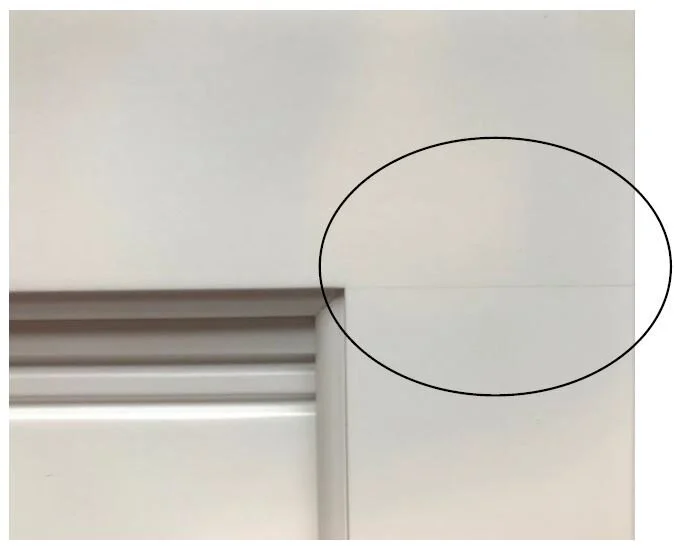
Why painted cabinet doors can show hairline cracks
The most important thing to understand is simple. All wood moves.
Wood naturally expands and contracts as temperature and humidity change throughout the year. On painted cabinet doors, this movement often shows up where the rails and stiles meet on the door frame. Over time, small hairline cracks can appear at these joints.
This is normal and not considered a defect. It is simply the result of seasonal wood movement.
Some factors make this more noticeable. Mitered doors tend to show cracking more than mortise and tenon construction. Wider rails are more prone to movement. Light paint colors also make these lines easier to see than darker colors.
The same movement happens in stained cabinets, but the grain and variation in the wood help hide it, so most people never notice.
You may also occasionally see similar hairline cracks on cabinet face frames.
How material choice affects painted cabinet performance
If you are ordering custom cabinets, the materials used in the door construction make a big difference in how painted cabinets look over time. Even if you are purchasing a stock cabinet line, understanding these differences helps set expectations.
Solid maple frame and solid maple center panel
Maple is commonly used for painted cabinet doors because it is hard, stable, and takes paint well. Hairline cracks at the frame joints should still be expected over time.
Solid wood center panels are made from several narrower pieces glued together. Sometimes these joints show through paint as faint lines. Seasonal movement can also cause slight shifting where the panel meets the frame.
In higher-end cabinets, center panels are finished before assembly so unfinished wood never becomes visible if movement occurs.
Maple frame with plywood center panel
Using plywood for the center panel reduces movement in the panel itself, but this option works only with flat panel doors.
Because plywood is made from layers of veneer, faint lines can occasionally appear where veneers meet. These doors can also feel lighter compared to solid wood or MDF options, though they are typically less expensive.
Maple frame with MDF center panel
An MDF center panel creates a very smooth painted surface. MDF does not expand and contract like solid wood, which helps prevent visible panel lines.
This option works well for both flat and raised panel doors. On raised profiles, the machined edges may show a slight texture, though once painted most homeowners find it minimal.
MDF frame and MDF center panel
Doors made entirely from MDF are very stable. Because MDF does not move like solid wood, hairline cracks at joints are greatly reduced or eliminated.
This material works especially well on tall doors that are more prone to movement. The main tradeoff is that machined profiles may not appear quite as sharp as solid wood.
One-piece MDF cabinet doors
One-piece MDF cabinet doors are routed from a single sheet, meaning there are no joints at all. Because of this, hairline cracks do not occur.
The tradeoff is that profiles are slightly softer than those made from assembled wood parts. Flat panel versions can also cost more due to machining time.
MDF vs. wood cabinets: appearance differences
MDF has no grain, so painted finishes appear completely smooth and uniform. Wood, on the other hand, can show subtle grain through the paint depending on how the finish is applied.
Some homeowners prefer the perfectly smooth look of MDF cabinets. Others like seeing a bit of natural character from the wood. Neither choice is right or wrong. It comes down to personal preference.
Painted cabinets in Chicago homes
In the Chicago area, seasonal humidity changes can be pretty extreme compared to other parts of the country. Dry winters and humid summers mean wood movement is more noticeable, especially on painted cabinet doors. That is one of the reasons material selection and door construction matter so much when planning painted cabinets here. Understanding how cabinets will react to those seasonal changes helps avoid surprises later and leads to better long-term results.
Final thoughts
Painted kitchen cabinets can look beautiful for many years, but understanding how materials behave helps avoid surprises later. Every option involves tradeoffs between appearance, stability, and cost.
The right choice depends on what matters most to you: whether that is a perfectly smooth finish, natural material character, or long-term stability.
Questions about painted cabinets?
Every project is a little different, and the right material choice often depends on the design, door style, and how the cabinets will be used. If you are planning a kitchen or built-in project and are unsure which direction makes the most sense, it is worth having that conversation early in the process.
If you have questions about painted cabinet finishes or want to talk through options for your project, reach out directly. I am always happy to walk through the pros and cons before anything gets built.
More about how we approach custom kitchen cabinets in Chicago. If you have existing quality cabinets that need a color update or fresh painted finish, see our cabinet refinishing and color update work.